 Reviews

 Proudly American

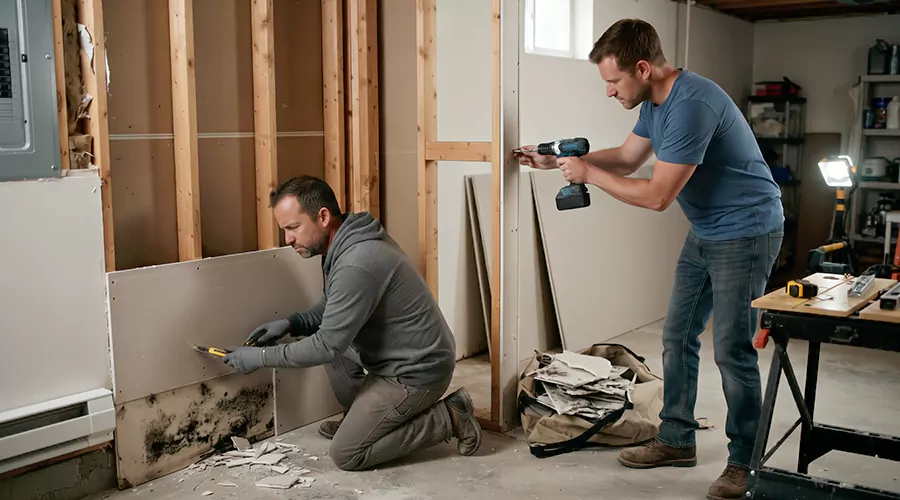
Mold-damaged drywall should usually be replaced when growth has penetrated the paper facing, the board has softened, or contamination has spread inside the material. Mold and drywall repair may be appropriate for minor surface growth when the drywall remains dry and structurally sound.
Drywall is porous, so moisture can move through its paper layer into the gypsum core. The decision to clean or replace it depends on the affected area and the condition of the wall.
Can Moldy Drywall Ever Be Saved?
Drywall may be saved when mold is limited to a small surface area and the board has not lost strength. The moisture source must be fixed, and the wall must dry fully before finishes are restored.
Drywall is more likely to remain when:
- The affected area is small.
- The board feels firm.
- The paper facing is intact.
- The moisture source has stopped.
- No musty odor remains after drying.
- Moisture readings return toward the dry baseline.
A small spot caused by brief condensation is different from a wall that stayed wet after a plumbing leak. Mold damage restoration becomes more involved when growth reaches hidden layers.
When Should Mold-Damaged Drywall Be Replaced?
Replacement is usually the better choice when drywall is soft or swollen. Deep staining and recurring odor can also indicate contamination below the painted surface. Porous material becomes harder to clean once growth extends into the paper or wall cavity.
| Drywall Condition | Likely Response |
|---|---|
| Small surface spotting | Clean and monitor |
| Firm board after a short clean-water leak | Dry and reassess |
| Soft or swollen drywall | Replace |
| Peeling paper facing | Replace |
| Mold on the back of the panel | Replace affected section |
| Sewage-contaminated drywall | Replace |
| Persistent musty odor | Inspect for hidden damage |
The EPA uses about 10 square feet as a practical dividing point between small mold cleanup and larger remediation guidance. Size alone does not decide whether drywall stays.
How Does Water Exposure Change the Decision?
Water exposure matters because drywall loses strength as it remains saturated. Mold also becomes more likely when wet materials do not dry within about 24 to 48 hours. A quick clean-water leak creates a better chance for drying than a long-running hidden leak.
For example, a pipe leak discovered the same day may leave drywall firm enough to dry. A slow leak behind a bathroom wall can support hidden growth for weeks before a stain appears.
Water damage and mold remediation may require opening the wall when insulation or the backside of drywall remains wet.
What Signs Suggest Mold is Inside the Drywall?
Hidden mold often causes changes that continue after the visible surface has been cleaned. Odor is one warning because growth can remain on the back of the board. Softness or swelling also suggests deeper moisture.
Watch for these signs:
- A musty smell returns after cleaning.
- Drywall feels soft when lightly pressed.
- Paint begins bubbling.
- Paper facing starts separating.
- Stains spread beyond the original wet area.
- Baseboards begin swelling.
- Mold reappears in the same location.
- Moisture readings stay elevated.
- Growth appears around wall openings.
- The wall was wet for several days.
Black color does not prove that a particular mold species is present. Black mold remediation follows the same moisture-control principle as cleanup for other visible indoor mold.
What Can You Check Yourself?
A moisture comparison can help determine whether drywall is still wet. Use a moisture meter designed for drywall and compare the affected area with the same type of wall in a dry room.
- Test a dry reference wall.
- Record the reading.
- Test several points on the affected wall.
- Mark each location.
- Repeat the measurements the next day.
- Look for readings moving toward the dry reference.
Do not cut into a wall simply to search for mold. Plumbing or electrical wiring may be hidden behind the surface.
Does Moldy Drywall Need Replacement After Contaminated Water?
Drywall exposed to sewage or contaminated floodwater is a stronger candidate for removal because porous materials can absorb contaminants. Cleaning the painted face does not address water that entered the paper or gypsum core.
Mold damage cleanup after contaminated water may involve removing affected drywall so the wall cavity can be cleaned and dried before rebuilding. New drywall should not close a cavity that still contains damp material.
When Should You Call a Professional?
Professional assessment is appropriate when the affected area is larger than about 10 square feet or mold keeps returning after cleaning. Help is also appropriate when contamination extends into several walls or the moisture source cannot be located.
Consider professional help when:
- Several rooms show mold growth.
- The drywall is heavily saturated.
- Sewage entered the wall.
- Mold appears near HVAC components.
- Insulation is affected.
- Electrical components became wet.
- The wall cavity has a strong odor.
- Repeated cleaning has failed.
Mold remediation and restoration may include containment before damaged drywall is removed. The wall cavity can then be cleaned and dried before repairs begin.
How Can You Prevent Mold From Damaging New Drywall?
Preventing repeat damage starts with correcting the moisture source before new drywall is installed. Replacing the panel without fixing the leak can allow the same problem to return behind a newly finished wall.
Use this maintenance routine:
- Check beneath sinks every month.
- Inspect plumbing connections several times a year.
- Test sump pumps before storm season.
- Watch ceilings after heavy rain.
- Use leak alarms near water heaters.
- Keep indoor humidity below 60 percent when possible.
- Investigate musty odors quickly.
A range of about 30 to 50 percent relative humidity is commonly preferred for routine indoor moisture control.
Conclusion
Mold-damaged drywall should be replaced when the board is soft or swollen, when growth penetrates the paper, or when contaminated water has soaked the material. Small surface growth may sometimes be cleaned if the drywall remains firm and fully dries. The moisture source must be corrected before repairs begin. If mold covers a large area or keeps returning, professional assessment can help define the proper scope.
Frequently Asked Questions
Does all mold on drywall require replacement?
No. Small surface growth may be cleaned when the drywall remains firm and the moisture problem has been corrected.
Can mold grow behind drywall without showing on the front?
Yes. Moisture can enter a wall cavity and support growth on the backside before visible staining appears.
Can you paint over mold-damaged drywall?
No. The mold source must be addressed first. Paint should be applied only after the wall is clean and fully dry.
How long can drywall stay wet before mold becomes a concern?
Wet materials should ideally dry within 24 to 48 hours. Longer moisture exposure increases the chance of mold growth.
Should drywall exposed to sewage be replaced?
Usually yes. Porous drywall can absorb contaminated water beyond the painted surface.
Can mold return after drywall replacement?
Yes. Mold and water damage repair can fail if the leak or humidity problem that caused the growth remains unresolved.